
Spotify Playlist (missing Mantaray, Pullover, Perfume, Laxton’s Superb, Gyres, Shiner, Ruth, Teen Anthems)
Youtube Playlist (complete!)
1. The Divine Comedy – Something for the Weekend
 A lot of groups around this time used Britpop as a springboard to expand their sound, make it more generous and expansive in scope. Sometimes this worked out well, as on ‘Something for the Weekend’, where Neil Hannon draws out The Divine Comedy’s baroque pop sound to make something truly universal. It’s a good summary of everything that Neil Hannon was doing right on Casanova – lust, sexual danger, literary jokes, joy and love. Sometimes I think the jokes are too much, but really there’s no need to feel embarrassed when they work so well. Later on, with his remake of ‘The Pop Singer’s Fear of the Pollen Count’ he would show how it could all be done in a much more unsuccessful fashion, but on the whole he seemed to get it right.
2. Longpigs – She Said
 The other Sheffield band, Longpigs consisted of three scene veterans (including Richard Hawley, whose Treebound Story were the first group recorded at the legendary Fon studios, and who would later win more critical acclaim than almost everyone else on this CD) and younger singer Crispin Hunt. ‘She Said’ is something of a showcase for the band, the sound of four people trying to outdo each other with the most passionate musical tricks possible. It should be a mess, but it’s a complete joy, with a bizarre, possibly brilliant lyric and a magnificent pause. Unfortunately the group would soon be counted among the many who lost it trying to ‘crack America’, but it was nice while it lasted.
3. Mantaray – I Don’t Make Promises
 Britpop d-leaguers Mantaray managed to get hoovered up by a major label in the wake of 1995 and all that, had their next LP produced by Ed Buller, and, well, afraid that’s about as interesting as the story gets. ‘I Don’t Make Promises’ is standard enough Britpop fare, not bad, not amazing, but not different enough to stand out in 1997 either. The group apparently fizzled out soon after the LP flopped.
4. Pullover – Holiday
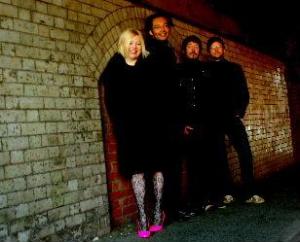 This is one of my favourite things on this compilation – Sleeper crossed with ‘Kennedy’ by The Wedding Present, but much, much better than that sounds. Pullover released three singles on Fierce Panda, the others nothing like ‘Holiday’ – instead they sound like a before-the-event Life Without Buildings. I’d recommend ‘Oddball’ if you can find it, a b-side about not being attractive enough to be a popstar but getting on with it anyway.
‘Holiday’ kept getting radio play, but their other songs didn’t, so when they took advantage of the buzz and signed for Big Life in ’96 their first move was to re-record their signature song – and for once its charm survived the bigger, more expensive production. Unfortunately it was at this point that the label went broke, and Pullover appeared to go down with them. Nothing was heard until a few years back when they suddenly had a myspace page with promises of a tour and a new album, but nothing seemed to come of it. Now there are at least three other bands called Pullover on last.fm, all with more active fans than MY Pullover.
5. Perfume – Lover
 Leicester indie band Blab Happy were a bit late for C86, a bit too cheery for the early 90s indie scene, and broke up before Britpop even started. With a member switched, they reformed as Perfume, and achieved a little (really just a little) more success. ‘Lover’ was a favourite of Paul Weller, Jo Wiley and Steve Lamacq, and, like pretty much everything else championed on The Evening Session, was doomed to never really escape from the indie charts to either commercial or critical acclaim. Still, there is probably a place in the world for this perfectly charming bit of light indie-pop .
6. Pulp – Mile End
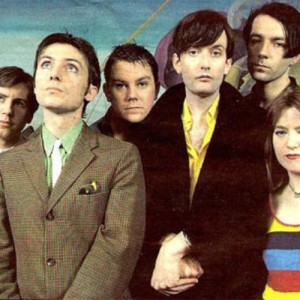 On June 17, 1995, Blur did their ‘Knebworth’ – a “homecoming” gig in Mile End stadium in London, with 27,000 people in the crowd and a million more listening on Radio 1. Jarvis Cocker had lived in the same area in the late 80s, finding it squalid and unwelcoming, and must have thought this celebration of the place naive and patronizing. Shortly after, Pulp recorded their ‘Mile End’, a song which sounds like a parody of Blur at their most jolly, and which describes the area in a tone so uncompromisingly grim that it seems a wonder that the area itself didn’t launch some sort of complaint. Britpop was now the scene that hates itself, and soon the anger would be redirected inwards- If you want to hear Pulp at their most self-doubting, check out ‘The Professional’.
7. Catatonia – You’ve Got A Lot To Answer For
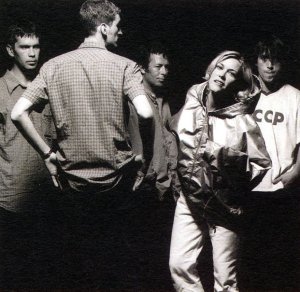 As Camden burned itself out, bands from other parts of the UK started to get their chance. Catatonia only got together in 1995, but managed to firmly establish themselves in the next few years, despite never exactly sounding like they were at the cutting edge. Perhaps that was even to their advantage. From their first LP, ‘You’ve Got A Lot To Answer For’ has a great pregnancy scare lyric – “if it turns to blue, what are we gonna do?” and generally sounds almost shockingly sweet and nostalgic for 1996. Unfortunately within a year they’d be writing songs about road rage and the X-files, and, once again, I lost interest, but at least Cerys seems to be a natural fit for a media career.
8. Octopus – Saved
 The curse of Scottish Britpop strikes again. Octopus were an 8-piece (hence the name) group from Glasgow, London and Paris who by any rights should have been a success. They had an albumsworth of hit singles, they gave decent interviews, they were signed to Parlophone and apparently had the full financial support of their marketing department – But a combination of over-reach by said record label, critical disinterest in indie-pop and public exhaustion with new bands meant that Octopus slipped under the radar, despite having three top-50 (but not much higher) singles. A shame, as their variety and quality, even on b-sides, stands out even now. I had the feeling that it would’ve taken just one hit for them to achieve Space-levels of ubiquity, but it wasn’t to be.
9. The Candyskins – Get On
 The Candyskins were an Oxford band, led by the two sons of Kenneth Cope (of Randall and Hopkirk (Deceased) fame), who had been around on the Oxford scene under one name or another since the early 80s. ‘Get On’ was a Mark Radcliffe favourite and an excellent 12” single, couped with an astonishing demo version of a song (“Car Crash”) they later completely ruined for the LP. They were disappointing when I saw them play at the Phoenix festival, though, and their subsequent career is therefore largely a mystery. It’s perfectly possible that I caught a bad show and there are more gems to find in their extensive discography, but who knows?
10. Rialto – Monday Morning 5.19
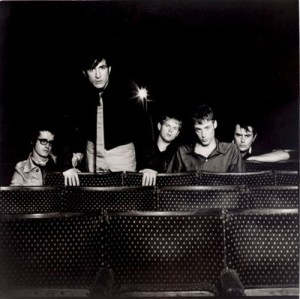 Another exercise in relabeling, Rialto were the second incarnation of Kinky Machine, a group who could easily have slotted into the first CD of this set, as they were, by their own words “delving into British pop music for influences, from the Kinks and the Jam and Clash to the Beatles.” The grab-bag of influences drawn on by Britpop also included a certain amount of chamber pop, though not a great deal. Rialto’s new idea was to expand this to encompass Bond themes, all a little too rich for my taste, but showing at least that there were directions to go that had nothing to do with Oasis.
11. Laxton’s Superb – Sugar’s Gone
 I only knew this group’s name, and their photo, and assumed they were from the Menswear-mod axis, but this sounds like they were more from the Oasis camp than the Blur one, so it’s no wonder they didn’t really fit in. All I can find out about Laxton’s Superb from the internet is that their album was never released, which seems par for the course by this point.
12. The Gyres – I’m Alright
 The Gyres seem to be the ultimate expression of the Britpop bubble bursting, and the final example of Scotland not being allowed to join in with all the fun. Signed to a large indie label, sent on tour with Cast, Oasis, Reef, Echobelly, Bon Jovi and David Bowie, advertised beyond all belief, all they managed to do was scrape the top 75 twice, then split up when their label went out of business. Judging by this documentary, made at their peak, they were a harmless bunch of kids having a great time playing at being rock stars, but of course that doesn’t mean they deserved success, especially when they weren’t bringing anything much new to the table.
13. Shiner – (We’ll Make You) Famous Honey
 A band I only heard about through a fanzine interview, Shiner seem to have released a couple of singles on an indie label before dropping completely off the face of the Earth (or at least the internet.) A shame as the four tracks I have by them are all terrific – all retro, but taking their inspiration from less obvious places, and having fun with it too. My only slight criticism is that singer Raaf is a bit too hoary blues-rock for my taste, but the songs more than make up for that. So, who knows why they never got any attention? It might have something to do with this, their debut single, being an attack on the current state of the music industry, singling out corrupt A&R types. A bold move in 1997.
14. Strangelove – Freak
 From the underrepresented Suede (and possibly Manics) mini-axis of Britpop, Strangelove were another group of veterans with a new lead singer. By turns poetic and nihilistic, Patrick Duff seemed like a rare creature – a potentially important artist with heaps of new ideas, some good, some bad, but all leagues away from the posturing and parody that Britpop had been reduced to. At first their problem was that they didn’t have any ‘hits’, but then they actually wrote some and still nobody really seemed to be interested. I remember seeing ‘Freak’ performed on the Jack Doherty show on Channel 5, and being positive that it would be a huge. How could it not be?
15. Blur – All Your Life
 My favourite Blur track, and it’s stuck on a b-side. Could it ever have been a single, though? As much as I adore it, part of it makes me feel a little queasy. As a song about staring down into a personal void and getting vertigo, this seems like the ultimate distillation of Blur’s post-Britpop comedown, but as sellable chartbound concepts go, it’s not really viable. Hiding it away on a b-side does seem odd, all the same, and I wonder if Damon found it a bit too personal to have to promote. Strangely enough, it does sound like a pop song for the most part, but this is for me the first time that the Blur trick of pairing jolly music and sad lyrics really worked, capturing a kind of existential hysteria.
16. Earl Brutus – The SAS and the Glam That Goes With It
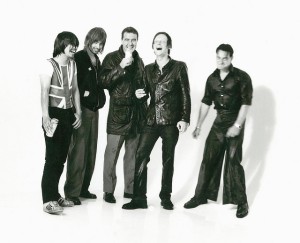 There is, of course, a world of music existing outside Britpop, and if one of the functions of music is to offer commentary on the world then kicking against Britpop is a natural stance for outsiders – and that’s as good a description of Earl Brutus as any. Whoever is responsible for their Wikipedia page wrote a neat summary of the group, which I can’t better:
“They were renowned for their chaotically raucous and visually entertaining live shows, which often featured unusual stage props, including messages and slogans that were displayed on revolving garage forecourt signs, written in neon lights or spelt out using funeral wreaths. Earl Brutus’s sound incorporated a diverse range of influences, including elements of early 1970s UK glam rock, the electronica of Kraftwerk, and the ramshackleness of the Fall. Their lyrics concentrated on the mundane side of modern British life while at the same time exploring its dark and seedy underbelly….. Live shows were augmented by the presence of Shinya Hayashida in the band, who was employed to stand on stage and headbang or shout random abuse at the audience.”
The SAS and the Glam That Goes With It seems to be a mockery of the 1997 zeitgeist, but who really knows what it’s about?
17. Ruth -Valentine’s Day
 Ruth were a local band from Southampton who made it to the big time – if the big time means having music videos and making a couple of appearances on daytime TV. After having no success beyond appearing on a Shine compilation, they disbanded, with singer / songwriter Matt Hales going to to have moderate success as a songwriter.
This compilation was supposed to only include music I genuinely like. I don’t know if I’d go that far with ‘Valentine’s Day’, but nothing better illustrates how predictable a lot of these groups had become. It simply sounds like they’ve been forced to make music with a wacky, upbeat Britpop sound despite their wishes or personal taste, and have trotted out novelty lyrics which even Space would have found a bit too silly. Then the middle eight briefly saves it, shows what they would rather be doing, but it’s only a momentary reprieve. It’s not a bad piece of music, exactly, but it seems to be disposable, and not in a good way.
18. Teen Anthems – I Hate Oasis (And I Hate The Beatles)
 It’s a bit of a risk to put “I Hate Oasis (And I Hate The Beatles)” on a compilation of any sort, as it sounds like deliberate mockery of the songs preceding it – and on this compilation, that’s exactly what it is. For me, the true end of Britpop was marked by Mark & Lard’s brief promotion to the Radio 1 Breakfast Show, where their odd humour fell flat and their outlandish features proved too confusing for the general public. It’s unclear why they made this their single of the week – either it was a provocation that contributed to their dismissal, or they already knew they were going and it was a “fuck you” to the zeitgeist. Either way, it’s extraordinary that it was played on Radio 1 at peak time at all, let alone five times. Even twenty years later the song is still making people furious, if Youtube comments are a reliable guide – so in 1997 it must have annoyed people a great deal. But these things simply needed to be said.
19. Helen Love – Long Live The UK Music Scene
 Teen Anthems follow-up single ‘Welsh Bands Suck‘ was keen to specify that “apart from Helen Love they’re a load of shite” – a good thing too, as Helen Love seem to have been of a similar mind about the music being championed in 1997. Essentially a female version of The Ramones with junk shop keyboards, Helen Love’s nearest brush with fame was this hugely sarcastic attack on the current musical gatekeepers, which alternates between presenting them as dominant bullies and as impotent, moribund dinosaurs. My only disagreement here is that I think the Longpigs & Bluetones are perhaps not the worst offenders to be singled out, but on the whole, this is a complete joy.
20. David Devant & His Spirit Wife – Life on a Crescent
We’ve come to the end of the story now. Britpop had burned itself out after a few years, all ideas used up, all energy transformed into bankrupt imitation and drudgery, the leading lights already doing their best to distance themselves, a habit they would continue for the next twenty years. Britpop’s central magazine, Select, had become a bitter, humorless rag, featuring an endless string of articles about Oasis, OCS, The Verve and Paul Weller, and at turns ignoring and despising all of the genuinely good, original music that was around. The NME was, if anything, worse. TV and radio had long ago moved on. Those left behind were by definition the easily nostalgic, those who were scared of change or wary of difference – hardly a rich pool for creative expression.
 Rather than leave on a down-note, though, let’s have a look at what could have been. If the opening premise of Britpop was to find a way to imbue music with a new kind of Englishness, then David Devant & His Spirit Wife were its ultimate expression, the way forward that should have been. They had one of the most entertaining live shows I’ve ever seen, and their records were brilliant from start to finish. The fact that they weren’t the hugest band in the world is hard for me to understand even now.
‘Life on a Crescent’ – a live recording for the Mark & Lard graveyard shift show – isn’t by any means typical DD&HSW, but as an evocation of suburban Englishness, it’s completely essential. Britpop might have failed, but in its minutiae, on its margins, we can find plenty that’s worth saving.
Britpop: The Great Rock & Roll Swindle – a surprisingly candid and informative collection of interviews from Mojo.
Thread on Britpop at ILM
















 haonowshaokao